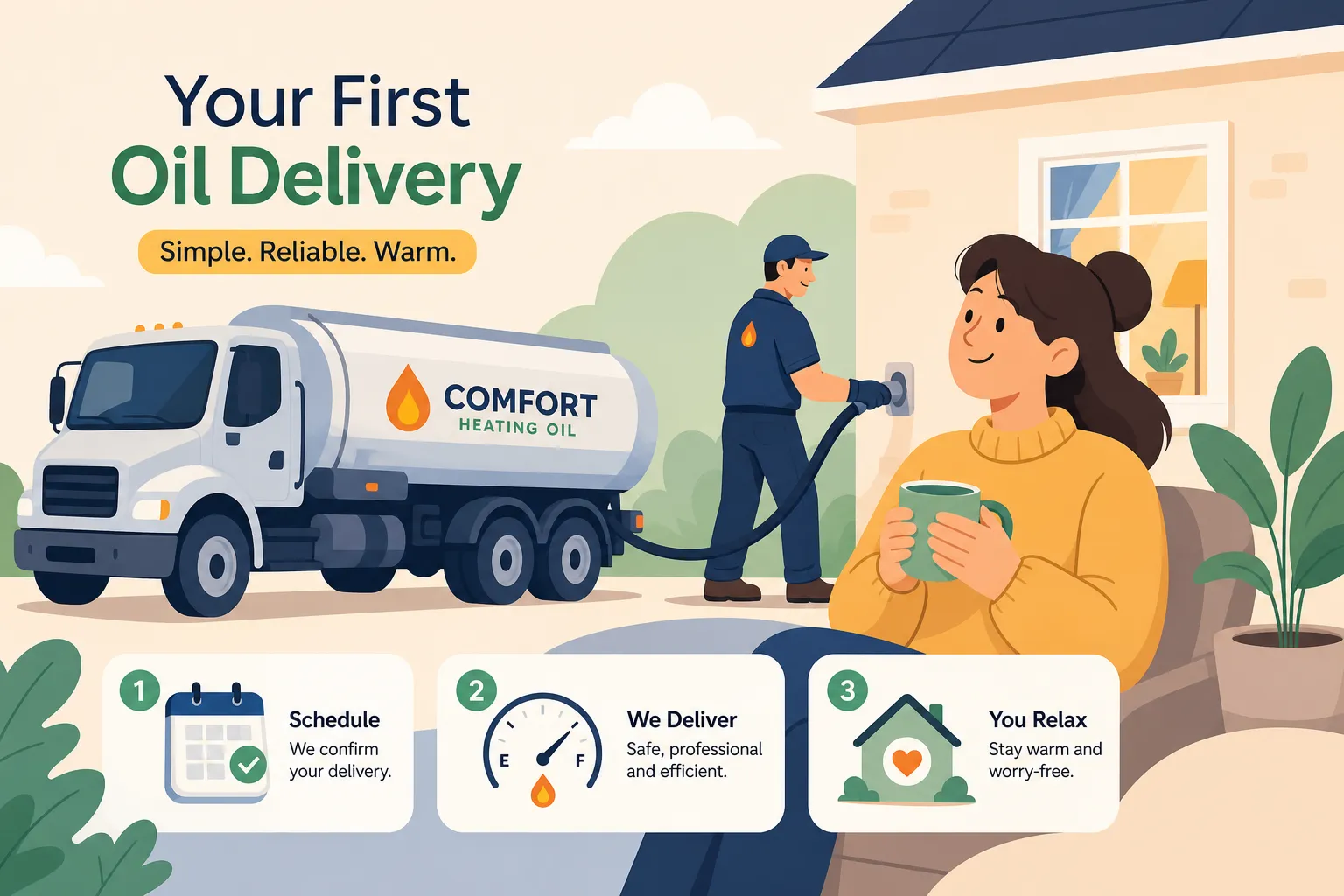
If you’re wondering what to expect from your first heating oil delivery, here’s a straightforward walkthrough built for Long Island homeowners. You just closed on your first house, the tank gauge is sitting somewhere around a quarter full, and you’ve got a delivery scheduled. A fuel truck is going to show up, and you’re not sure what you’re supposed to do, where to stand, or how the whole thing wraps up.
Here’s the short answer: it’s simple, fast, and mostly hands-off. Typical residential fills run 10 to 20 minutes of pumping time, with total driver time on your property, setup included, landing somewhere between 15 and 40 minutes depending on tank size. The driver handles everything. You just need to do a little prep work beforehand and know what to look for when it’s done.
If you’re ordering through Oil Prices Long Island, the process is even more straightforward. They accept cash on delivery (COD), so there’s no account setup and no service contract to sign before your first gallon hits the tank, just confirm these terms when you call, since policies can vary. This guide covers four things: how to prep your property, what the driver does on arrival, how the actual fill works, and how payment is handled.
How to prep your home for your first heating oil delivery
The driver needs a clear, unobstructed path from the street to your fill pipe. That’s the small capped pipe sticking out of the ground or the side of your home, near where your tank sits. Move any vehicles, bikes, or equipment out of the driveway so the truck can back in safely. In winter, shovel snow off the path and put down salt or sand so the driver isn’t slipping on ice while carrying a hose.
Make sure your house number is visible from the street. Drivers work through long route lists, and a clearly marked address keeps things moving. While you’re at it, check your tank gauge before calling to schedule.
How to locate the fill pipe
The fill pipe is typically a capped metal pipe, roughly two inches in diameter, poking out of the ground or through a foundation wall near the tank. It’s usually within a few feet of the vent pipe, which is a smaller pipe with a mesh cap on top. If you’re not sure which is which, the fill pipe takes the fuel hose; the vent pipe is where the air escapes during the fill.
How to read the tank gauge
The gauge is a small glass or plastic window on top of the tank, with a dial marked F, 3/4, 1/2, 1/4, and E. To read it accurately, get your eyes level with the gauge face and match the center of the indicator disc to the nearest mark. This tells you roughly how much space is left in the tank so the supplier knows how many gallons to bring.
Never let the tank drop below 1/4. Running completely dry pulls sludge and sediment from the bottom of the tank into your fuel line, which can shut down your furnace and require a service call on top of the delivery. If you’re unsure how to find the gauge or read it, just say so when you call. A good local supplier will walk you through it.
What the driver does when the truck pulls up
The driver backs the truck into your driveway, walks the property, and locates your fill pipe. Before attaching anything, they place a protective rag on the ground beneath the fill pipe to catch any drips. They also do a quick visual check of the tank and pipes. If something looks damaged or unusual, they’ll flag it for you before pumping a single gallon.
Many suppliers allow unattended deliveries if you provide access instructions in advance, confirm this with your supplier before your first order. For your first delivery, though, being home is a good idea. You can point out the fill pipe if it’s not obvious, answer any access questions, and get comfortable with the process before you’re doing it on autopilot next time.
Once the driver connects the hose, they open the valve slowly and listen for the vent whistle. That’s a small device on your vent pipe that makes a steady high-pitched sound while air is being pushed out during the fill. The whistle running means everything is working correctly. When the whistle stops, the tank is full. If you ordered a set number of gallons instead of a fill-up, the truck’s meter cuts off automatically at that amount. After pumping, the driver disconnects the hose, wipes down the fill pipe, replaces the cap, and leaves a delivery slip at your door showing the date, gallons delivered, and price per gallon.
How long it takes and what to watch for
For the standard 275-gallon tank most Long Island homes have, a delivery of 150 to 200 gallons takes about 5 to 10 minutes of pumping time. The driver’s total time on your property, including setup and paperwork, runs about 15 to 20 minutes. Larger tanks or paired tanks take a bit longer, but no residential delivery should stretch past 40 minutes from arrival to departure.
A few things deserve a closer look after the driver leaves. If the vent whistle never made any sound during the fill, flag it immediately, a blocked vent pipe can cause an overfill. A faint oil smell after delivery is normal; a visible spill around the fill pipe is not. Also check your delivery slip against what you expected based on your gauge reading. If the gallons delivered are significantly lower than the space you thought was in the tank, call your supplier to verify. A big discrepancy can sometimes indicate a tank issue worth investigating.
Payment and scheduling your next delivery
Cash on delivery is the most straightforward way to get started. You pay the driver directly at the time of delivery, no billing account required, no contract to sign. Oil Prices Long Island accepts COD across both Nassau County and Suffolk County, which means your first order is just a phone call. Confirm your address, describe your tank access, and have payment ready when the truck arrives. Reach them at (631) 714-2999 for Suffolk County or (516) 986-2239 for Nassau County.
For scheduling, you’ll choose between two approaches: automatic delivery or will-call. Automatic delivery uses weather data and your usage history to predict when you need a refill and schedules it without you having to call. It works well once you have a season or two of deliveries establishing your usage pattern, but for a first-time customer there’s no history to work from, which makes the predictions less reliable. Will-call keeps you in control: you check the gauge, you call when it’s time, and you can compare prices before committing.
For your first season, will-call is the better fit. Just don’t wait until the gauge hits 1/4 to pick up the phone. Order when you’re at 1/3 so you’re giving your supplier a few days of lead time and keeping a safe buffer in the tank at all times.
You’re ready for your first delivery
Now you know what to expect from your first heating oil delivery. The home heating oil delivery process comes down to a short checklist: clear the driveway and path to the fill pipe, check the tank gauge, let the driver handle the fill, review the delivery slip when they’re done, and pay on delivery. The whole visit takes under 30 minutes for most homes, and you don’t need to do anything during the actual pumping except stay out of the way.
For new Long Island homeowners who want COD payment and local service across Nassau and Suffolk Counties without signing a long-term contract, Oil Prices Long Island is a solid place to start. Give them a call, get your first heating oil delivery on the books, and you’ll have the whole process dialed in for the rest of the season.