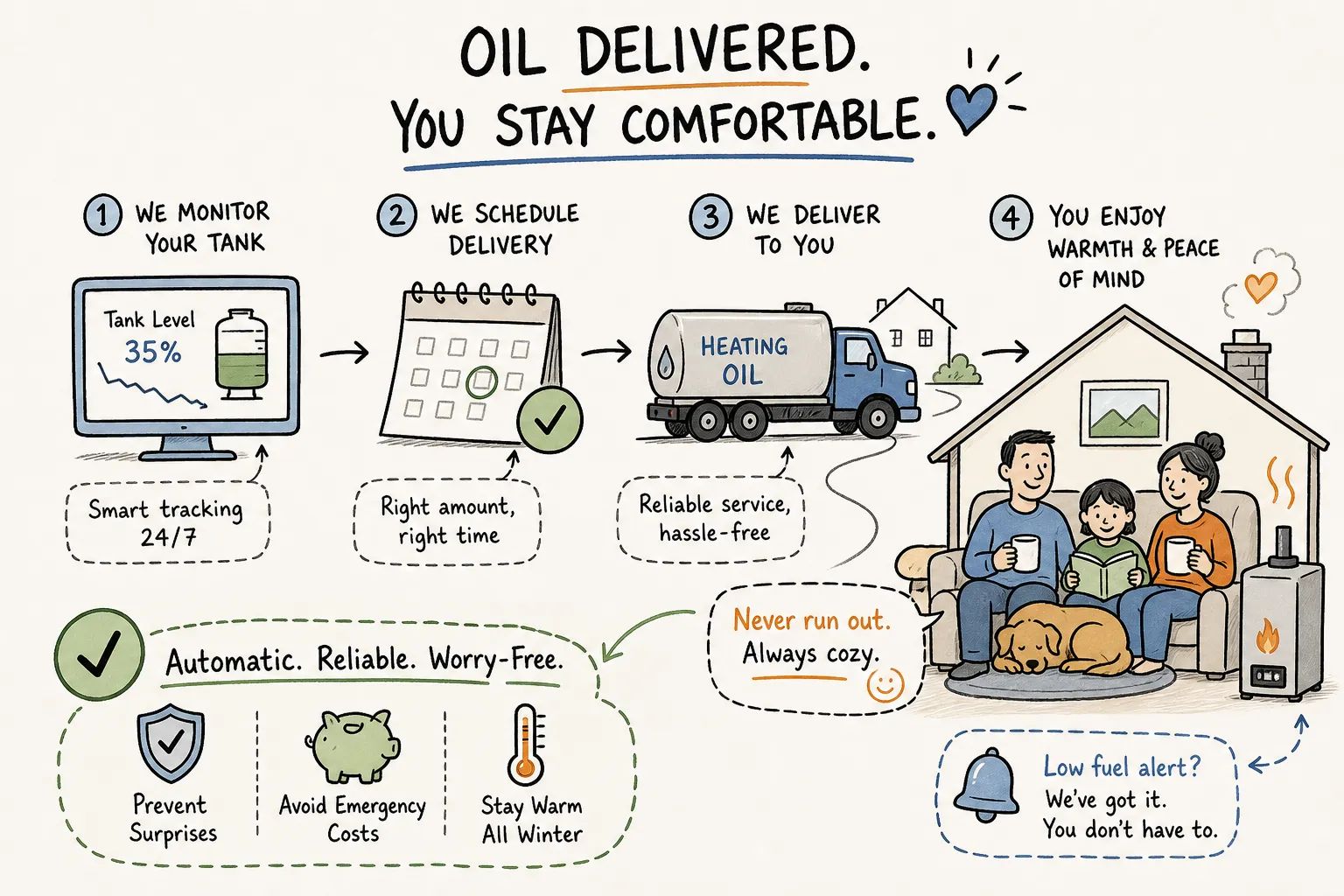
When you need home oil delivery for the first time, say, you’ve just moved into an oil-heated house on Long Island and the temperature is dropping into the twenties, it’s easy to feel lost. You glance at the tank gauge reading just above a quarter, you have no idea when it was last filled, and you’re not sure who to call. That moment catches a lot of new homeowners off guard. The good news is that home heating oil delivery is a straightforward process once you understand the basics, and getting set up takes little more than a single phone call if you know what to have ready.
This guide walks through everything: opening your account, what delivery day actually looks like, how to read your tank accurately, and how to avoid the one mistake that costs homeowners real money every winter. If you’re on Long Island, Oil Prices Long Island offers competitive per-gallon pricing, cash on delivery, and service across both Nassau and Suffolk County, no long-term contracts required.
Call Us Now for the Lowest Oil Price on Long Island!
Suffolk County (631)714-2999
Nassau County (516)986-2239
How to set up your home oil delivery account
Getting started with a local heating oil company is often quicker than homeowners expect. COD-based providers like Oil Prices Long Island may not require a credit check or long-term contract to schedule your first delivery, you’re placing an order for fuel, not signing up for a subscription. Policies vary by supplier, so it’s worth asking upfront what’s needed to get your first fill scheduled.
What you need before you call or order
Have your full name, service address, and tank details ready before you pick up the phone. Most residential homes on Long Island have a 275-gallon above-ground tank, though 330-gallon tanks are common too. The driver also needs to know where your fill pipe is located outside the house, so take a quick look before your first delivery to confirm it’s accessible and not blocked by snow, furniture, or an overgrown shrub.
Will-call vs. automatic delivery: which fits your situation?
Will-call delivery means you monitor your own tank and place an order when you’re ready. Automatic delivery means your provider estimates your usage using degree-day calculations and schedules deliveries before you run low. Will-call gives you full control over timing and lets you shop prices, but the responsibility for tracking your fuel level falls entirely on you. Automatic delivery is the better fit for busy households, anyone who travels during the heating season, or homeowners who’d rather not think about it. Oil Prices Long Island can work with you on a delivery plan that fits your schedule.
What actually happens on home oil delivery day
A delivery visit typically requires nothing from you and is usually over before you’ve finished a cup of coffee. The driver doesn’t need to enter your home. Knowing what happens step by step removes any uncertainty, especially if it’s your first delivery at a new address.
The delivery process from arrival to fill-up
The driver parks the truck, unreels a hose from the vehicle, and connects it directly to the fill pipe on the exterior of your home. Oil is pumped into the tank while a vent pipe releases air to prevent pressure buildup. You’ll receive a delivery ticket showing the exact number of gallons delivered and the per-gallon price. Most residential deliveries land between 150 and 250 gallons depending on how low the tank was before the order, with 150 gallons being a common minimum for standard delivery.
Payment on delivery and what to expect at the door
For COD customers, payment is collected at the time of delivery by cash or check. That’s how Oil Prices Long Island operates: the driver collects payment at the fill-up, so you always know what you owe before the truck pulls away. If you aren’t home, the delivery ticket is left at your door. COD arrangements are generally simpler than billing accounts, though individual supplier policies on account setup vary. Pricing is quoted per-gallon pricing without service contract fees or tank rental charges added on top.
How to read your tank gauge and track your fuel level
The float gauge on top of a standard 275-gallon tank shows full, 3/4, 1/2, 1/4, and empty. These gauges are useful for a general sense of your level, but they stick and read inaccurately over time. Relying on one alone is how people get caught short on the coldest week of February.
The dip-stick method for an accurate tank reading
Use a clean, solid stick lowered straight to the tank bottom, then measure the wet portion in inches. A standard heating oil tank chart converts that number to gallons, for a 275-gallon horizontal tank, approximately 11 inches of oil corresponds to roughly 100 gallons, though exact figures vary by tank geometry, so match your reading to a tank chart specific to your tank model. This takes two minutes and is far more reliable than a sticky float gauge. One note: skip bamboo sticks, since they absorb oil and give you a falsely high reading.
How to estimate your seasonal oil usage
Track the total gallons you order each heating season, typically October through March. Average the numbers over two or three years to establish your baseline. Most Long Island homes with standard insulation use between 500 and 800 gallons per heating season, the actual number depends on factors like your home’s age, insulation quality, how drafty the construction is, and your thermostat habits. That figure helps you plan delivery timing, budget for the year (see Monthly Average Home Heating Oil Prices), and avoid scrambling for an emergency order when a cold snap hits.
How to avoid running out of heating oil
Running out of oil isn’t just uncomfortable. It means a service call to bleed the fuel line and restart your heating system, which typically runs between $50 and $150 on top of your delivery cost. That bill climbs further if the burner pulled sludge from the bottom of an empty tank. Avoiding a runout entirely is the cheapest decision you can make all season.
Set a consistent reorder trigger before the season starts
Place your order when the gauge hits 1/4 tank, which equals roughly 68 gallons in a 275-gallon tank. That gives you a 7 to 14 day buffer while your provider schedules delivery. Most standard deliveries also require a 150-gallon minimum, so waiting until the tank is nearly empty can limit your options or trigger a smaller-order surcharge. Make the quarter-mark your hard reorder line, no exceptions.
What happens when a tank runs completely empty
When the tank empties, the heating system loses its fuel feed and the burner shuts off. Restarting requires bleeding air from the fuel line. Some homeowners with the right equipment and experience can prime the system themselves, but many will need to call a technician, and that emergency service call costs real money. Treating 1/4 tank as your reorder point, not your warning point, is the single habit that keeps you warm and keeps unnecessary costs off your heating bill.
Why Oil Prices Long Island makes home oil delivery simple
For homeowners across Nassau and Suffolk County, Oil Prices Long Island removes the most common complications from the process. There’s no long-term contract to sign and no credit account required before your first delivery. You call, you order, and a driver is dispatched, typically within the same week, though lead times can vary by season and demand.
COD payment, transparent pricing, and no hidden fees
Oil Prices Long Island accepts cash on delivery, which means you pay the driver directly at the time of the fill-up. Pricing is quoted per gallon without service contract fees or tank rental charges added on top. For budget-conscious households and seniors on fixed incomes, that kind of straightforward pricing can add up to meaningful savings over a full heating season.
Reliable home oil delivery across all of Long Island
Whether you’re in Riverhead, Hempstead, Massapequa, or anywhere in between, Oil Prices Long Island covers the full stretch of both Suffolk and Nassau County. Call (631) 714-2999 for Suffolk County or (516) 986-2239 for Nassau County to place an order or ask about your first delivery. If you’re searching for heating oil delivery near me anywhere on Long Island, these are the numbers to keep on hand.
Start the season before your tank tells you to
Home oil delivery is straightforward once you know the system. Set up your account before the cold arrives, decide whether will-call or automatic delivery fits your schedule, verify your tank level with the dip-stick method, and place your reorder at the 1/4 mark. Those four habits are the difference between a stress-free winter and an expensive emergency call.
For practical, state-level guidance on saving energy and managing heating fuels, consult the home heating oil and propane guide.
The right local provider makes every part of this easier. Oil Prices Long Island serves Long Island homeowners with no long-term contracts, no credit hurdles, and per-gallon pricing that’s built to compete. Paying on delivery keeps the process simple, and same-week delivery options mean you won’t be left waiting when temperatures drop. If you want straightforward, contract-free home oil delivery on Long Island, reach out to Oil Prices Long Island before your tank gets low. That one move makes every Long Island winter easier to manage.