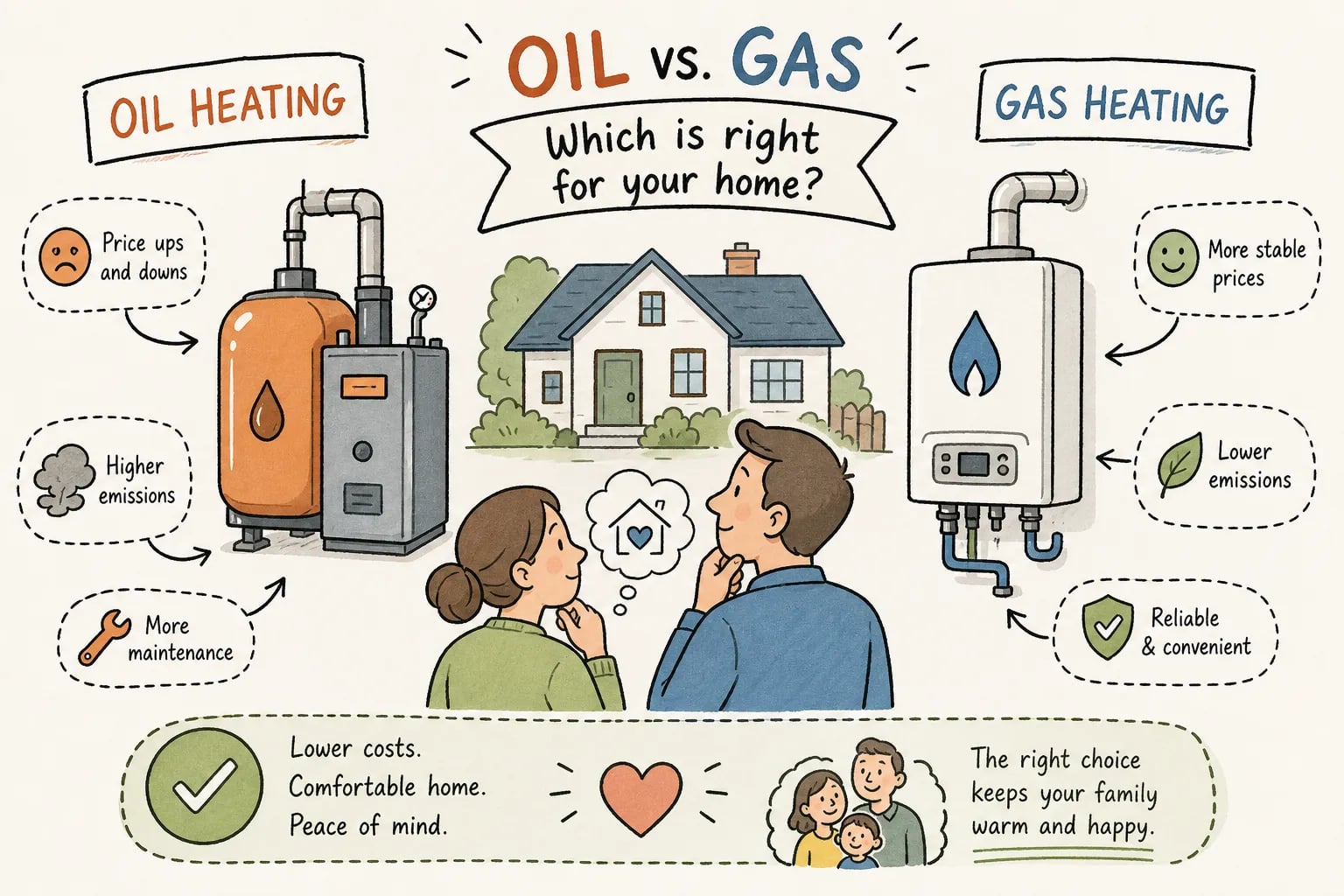
Oil or gas heating is one of the most consequential decisions Long Island homeowners face when a furnace ages out or a gas main suddenly appears down the street. Heating oil and natural gas both get the job done through a hard Nassau or Suffolk County winter, but they carry very different price tags, efficiency profiles, and infrastructure requirements. This guide cuts through the contractor pitches and gives you a clear framework to work with.
Five factors drive the answer: annual operating cost, efficiency ratings, upfront and conversion costs, maintenance demands, and emissions. Work through each one against your specific situation and the right choice becomes straightforward.
Oil or gas heating: what it actually costs to run each system every year
Raw fuel prices mislead without a common energy unit to anchor them. On a BTU basis, heating oil currently runs roughly $29 to $33 per MMBtu based on 2026 EIA projections, around $4.00 to $4.50 per gallon nationally. On Long Island, NYSERDA survey data puts the average retail price closer to $5.22 per gallon as of mid-2026, pushing the local cost per MMBtu higher still. Natural gas sits near $3 per MMBtu at the national wholesale benchmark, though retail rates at the meter run higher depending on your utility territory.
Translate that into a seasonal dollar figure: a home needing 80 MMBtu of heat per winter pays roughly $2,320 to $2,640 on oil at national averages. At Long Island’s $5.22-per-gallon retail price, that same 80 MMBtu costs closer to $3,500 to $3,800, a gap that makes the fuel-cost comparison concrete. Retail natural gas adds cost above the wholesale benchmark, but regional data from the EIA and NYSERDA consistently show the price difference between the two fuels remaining wide across the Northeast, though specific utility tariffs and distribution charges can narrow it in some service areas.
AFUE efficiency ratings narrow the gap but don’t close it. AFUE measures how much of each fuel dollar converts to usable heat. Modern oil furnaces typically land at 84 to 90% AFUE; oil boilers usually fall in the 80 to 87% range. Natural gas furnaces can reach 98% AFUE on condensing models, and ENERGY STAR gas boilers require 90% or higher to qualify. Even when an oil system runs at 87% AFUE and a gas system runs at 95% AFUE, using the NYSERDA cost figures cited above, the underlying fuel cost difference is large enough that gas still wins on annual operating cost in most scenarios where gas service is available.
Oil or gas heating: conversion and upfront costs
A new oil furnace or boiler installed runs roughly $6,000 to $12,000, including equipment, labor, and standard system setup. Long Island labor costs trend above national averages, and most oil systems carry a serviceable lifespan of 20 to 30 years, a factor worth folding into any cost-per-year comparison. New gas installations generally cost less when infrastructure is already present, though the comparison depends heavily on local contractor rates and whether the home already has an active gas meter.
Converting from oil to natural gas is where the numbers get serious. A full conversion typically runs $8,000 to $15,000 or more once you account for the new appliance, gas-line piping, venting modifications, and required permits. Permits alone can run $100 to $1,500; piping and hydronic work can add $600 to $3,000 before appliance and labor costs enter the picture.
The single biggest variable is whether a gas main already runs to your street. In Nassau County, National Grid serves most areas, but address-level confirmation is still required. In Suffolk County, large portions of eastern Suffolk, including the East End, North Fork, and Hamptons, have no gas service at all. If a main isn’t at your curb, costs climb sharply and the project timeline stretches. Based on current fuel-price spreads in the Northeast, payback periods typically run five to eight years when conditions align, and can extend past ten years when they don’t. New York homeowners should check NYSERDA’s residential programs and the federal energy-efficiency tax credits available for 2026 before finalizing conversion budgets, since incentive availability varies by utility and equipment type and can shift the math by thousands of dollars.
Maintenance demands and environmental impact
Oil heating systems are typically serviced annually, per industry guidance and NYSERDA recommendations. A standard tune-up runs $120 to $300 per year, and that figure can reach $400 to $600 when filter changes, nozzle replacements, or minor repairs are added. Natural gas systems generally need service every one to two years, with routine maintenance usually landing in the $90 to $200 range. That service-frequency difference compounds over a decade: oil heat demands consistent yearly attention to maintain efficiency and catch problems before they become expensive ones.
On emissions, natural gas produces approximately 53.1 kg of CO2 per MMBtu of heat; heating oil produces about 74.0 kg per MMBtu, roughly 28% more CO2 for the same heat output. Oil-fired systems also emit more NOx and particulate matter than gas-fired systems under normal combustion. New York State now mandates ultra-low-sulfur heating oil at 15 parts per million, which is 99% lower in sulfur than older conventional grades. A NYSERDA-funded study found that ULS heating oil at 15 ppm reduces sulfur oxide and particulate emissions to near-zero levels, bringing them close to gas-fired equipment on those specific measures.
Should you convert, replace in kind, or stay on oil?
Converting to gas makes the strongest financial case when a gas main is at your street, your current oil equipment is due for replacement, your annual heating load is high, and you plan to stay in the home long enough to clear the payback window. Review NYSERDA’s current incentive offerings and applicable federal tax credits before locking in a conversion budget, incentives vary by utility and equipment, and some programs that were available in prior years have since changed for 2026.
If gas infrastructure isn’t at your street, your oil equipment is relatively new, or the payback period extends past your expected ownership timeline, staying on oil is a rational financial decision. The fastest way to cut heating costs without switching fuels is to shop your per-gallon rate aggressively. Oil Prices Long Island serves Nassau and Suffolk County homeowners with competitive per-gallon rates, cash-on-delivery payment, and no contract required, a straightforward option worth comparing when you’re pricing local suppliers.
Pairing a competitive per-gallon rate with annual tune-ups and a programmable thermostat can realistically trim oil consumption by 10 to 15%, closing a meaningful share of the operating cost gap between oil or gas heating without the upfront exposure of a conversion project. That’s a legitimate strategy, not a consolation prize.
Making the call
When gas access, equipment timing, and payback math all line up, conversion deserves a detailed contractor quote. When even one of those conditions falls short, staying on oil with a lower per-gallon supplier and a well-tuned system is a sound long-term position, not a fallback.
This is a real dollar decision. Get itemized quotes from at least two licensed contractors, confirm gas main access at your specific address, check current NYSERDA and utility incentives, and run the numbers against your actual heating load before committing. Whether you’re actively weighing oil or gas heating or you’re already locked into oil for the foreseeable future, knowing your per-gallon options across Nassau and Suffolk County is one of the most direct ways to keep heating costs under control this season.